The Quiet Ones Are Carrying More Than You Think: How to Spot the Collaborators You Keep Walking Past
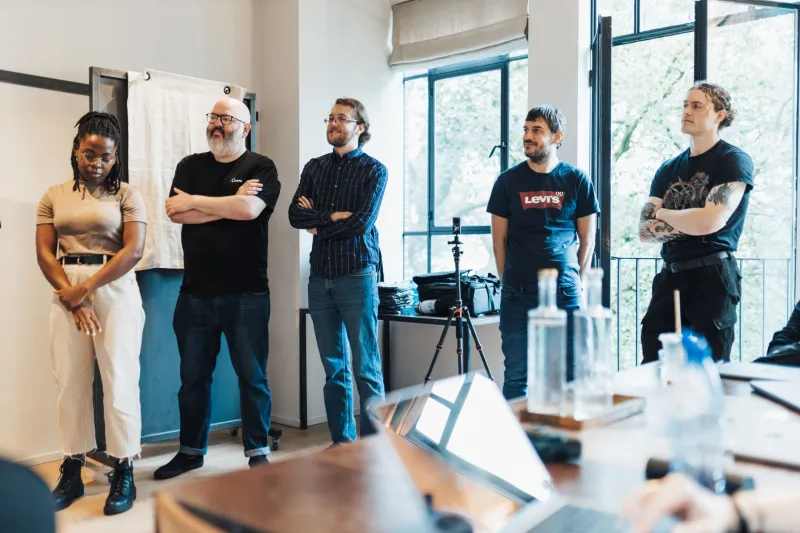
The Loudest Person in the Room Isn't Always the Best One
Here's a scenario that probably sounds familiar. You're pulling together a team for a new project — maybe a product launch, a consulting engagement, or a community initiative — and you instinctively reach for the same handful of names. The ones who showed up at the last event. The ones who replied to the group thread. The ones whose names seem to pop up everywhere.
And somewhere in the background, quietly doing excellent work, is someone you've completely overlooked.
This isn't a character flaw. It's a structural problem. The way most of us build our professional circles — through visibility, volume, and social momentum — is almost perfectly designed to surface the self-promoters and sideline the people who let their work do the talking. Which means you're probably making decisions about collaboration with incomplete information, and you don't even know it.
Why Traditional Networks Filter Out the Wrong People
Professional networking, in its default form, rewards a very specific set of behaviors. Showing up. Speaking first. Posting consistently. Pitching confidently. These aren't bad traits — but they're also not the same as being genuinely skilled, reliable, or innovative.
When we treat visibility as a proxy for value, we create a system that amplifies the already-loud and buries the quietly capable. Think about the colleague who never dominates a meeting but somehow always solves the problem nobody else could crack. Or the freelancer who doesn't hustle on social media but delivers work that makes clients come back year after year. Or the community member who shows up consistently, helps others connect, and never asks for anything in return.
These people exist in almost every professional network. And most of the time, they're invisible — not because they lack talent, but because the system wasn't built to find them.
The Hierarchy Problem
Organizational structures make this worse. In most workplaces and professional communities, information flows upward and outward based on title, seniority, and social capital. The people who get recommended for projects, introduced at events, or tapped for opportunities tend to be the ones who already have a platform.
This creates a feedback loop. Visibility leads to opportunity, which leads to more visibility. Meanwhile, someone three rungs down the ladder — or operating in a different corner of your network — is building skills and perspective you genuinely need, and they're not getting surfaced because no one has a mechanism to find them.
It's not malicious. It's just how most networks operate when left on autopilot.
What You're Actually Losing
The cost of this blind spot isn't just abstract fairness — it's practical. When you consistently collaborate with the same visible people, you get the same thinking, the same approaches, and the same results. The diversity of perspective that makes collaboration genuinely generative doesn't come from adding more of the same.
It comes from pulling in the person who sees the problem differently because they've been working in a different context. The one who's been quietly solving adjacent problems. The one whose unconventional background makes them weird on paper and invaluable in practice.
Missing those people isn't just a missed connection. It's a missed breakthrough.
How to Actually Find Who You've Been Missing
So how do you start seeing past your own blind spots? A few approaches that actually work:
Pay attention to who helps without being asked. In any community or organization, there are people who quietly step in, share resources, or solve problems without making it a production. These are people with initiative and generosity — two of the most underrated collaboration traits out there.
Ask different questions when you're looking for collaborators. Instead of "who's the best at X?" try "who do you know that's been quietly working on X?" or "who surprised you recently?" The second set of questions bypasses the visibility filter and starts surfacing people who operate below the radar.
Look at the edges of your network, not just the center. The people you're weakly connected to — the ones you know of but haven't really engaged with — are statistically more likely to bring you new information and perspective than your closest contacts. Deliberately reaching out to those peripheral connections is one of the highest-leverage moves you can make.
Create low-stakes ways for people to show up. Not everyone is comfortable pitching themselves in a room full of strangers. If your community or team only offers high-pressure, high-visibility entry points, you're going to keep attracting the same personality types. Workshops, small-group conversations, async collaboration — these create different kinds of on-ramps.
Notice who does the unglamorous work. Whoever is organizing the logistics, following up on the threads, keeping the shared doc updated — these people have operational intelligence and commitment that's incredibly valuable. They're often invisible precisely because they're too busy being useful to self-promote.
Rethinking What "Qualified" Looks Like
A lot of the time, the collaborators we overlook aren't hidden because they're hard to find. They're hidden because we're looking for the wrong signals. We're scanning for the polished pitch, the impressive title, the recognizable name — and filtering out everyone who doesn't fit that template.
But the best collaborations often happen between people who complement each other's gaps, not people who mirror each other's strengths. And the person who fills your gap most perfectly might not look like a conventional success story at all.
At People3 Hub, the whole premise is that connection and collaboration work better when you expand who you're willing to see. Not just who's already in your line of sight.
Start Somewhere Specific
You don't need to overhaul your entire network overnight. Start with one concrete step: think of someone in your existing circle — a community, a workplace, a professional group — who you know of but have never really engaged with. Someone who seems solid but has never been on your radar for a project or collaboration.
Reach out. Not with a pitch, just with genuine curiosity. Ask what they're working on. Ask what problems they're trying to solve.
There's a decent chance you've been walking past exactly the person you needed.