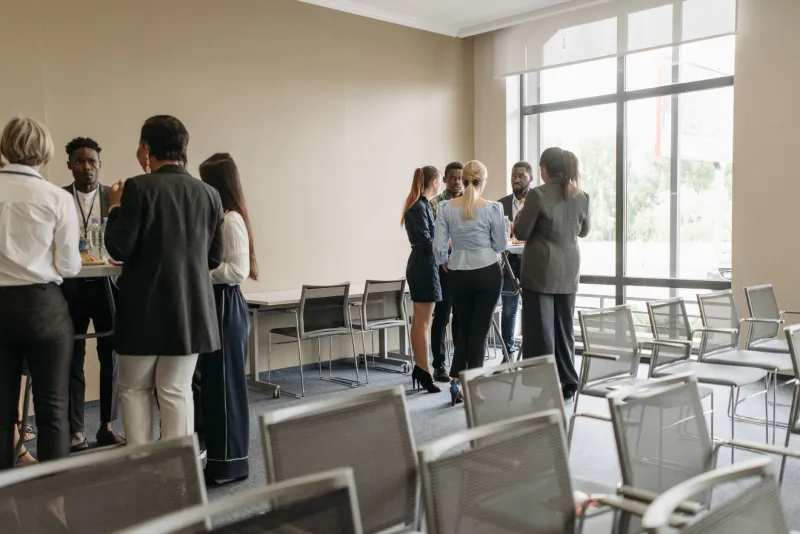
Forget the Conference Badge: 7 Unexpected Places Where Real Professional Connections Are Being Made Right Now

Let's be honest about traditional networking events for a second. You show up, you grab a name tag, you work the room with your thirty-second pitch polished to a shine, and you collect a stack of business cards you'll probably never follow up on. Maybe you land one decent connection out of every three events you attend. Maybe.
There's nothing wrong with conferences and mixers — they serve a purpose. But if that's the only place you're looking for professional relationships, you're leaving a lot on the table. The most durable, generative connections often form in spaces that have nothing to do with organized networking at all.
Here are seven places where real professional relationships are happening right now — and how to make the most of each one.
1. Niche Slack Communities
Not the giant, unfocused Slack workspaces with fifty thousand members and a firehose of noise. The good ones — the ones with a few hundred highly specific professionals who all care deeply about the same narrow thing — are some of the richest networking environments available today.
There are active Slack communities for independent consultants, for SaaS founders at specific revenue stages, for marketers in healthcare, for women in supply chain. The specificity is the point. When everyone in the room shares a very particular context, conversations get substantive fast.
How to work it: Lurk for a week to understand the culture, then contribute before you ask for anything. Answer someone's question. Share a resource. Be genuinely useful. Relationships in these spaces form through consistent, low-pressure interaction over time — not through cold DMs.
2. Local Maker Spaces
Maker spaces — shared workshops equipped with 3D printers, laser cutters, electronics labs, and woodworking tools — have quietly become some of the most interesting professional crossroads in cities across the US. You'll find hardware startup founders next to high school teachers next to industrial designers next to hobbyists who are actually engineers by day.
The physical, hands-on environment strips away a lot of the performative quality that networking events can carry. People are focused on making things. Conversations happen organically, around shared problems and shared tools.
How to work it: Sign up for a class or a workshop rather than just buying a membership. Structured activities give you a natural reason to interact with people you wouldn't otherwise approach. Cities like Denver, Portland, and Detroit have particularly vibrant maker space cultures worth exploring.
3. Industry Discord Servers
Discord has shed most of its gaming-only reputation and is now home to some genuinely professional communities — particularly in tech, design, marketing, and creative industries. The format, with its mix of real-time chat and voice channels, encourages a different kind of interaction than email or LinkedIn: faster, more casual, and surprisingly candid.
Many Discord servers also host regular voice hangouts or "office hours" sessions where members can drop in and talk through challenges. These low-stakes conversations often turn into the most valuable professional exchanges of the week.
How to work it: Look for servers affiliated with newsletters, podcasts, or tools you already use. Those built-in shared interests give you immediate common ground with every other member.
4. Mastermind Groups
A well-run mastermind group — typically four to eight people who meet regularly to share challenges, hold each other accountable, and offer peer-level feedback — is one of the most underutilized professional development tools available. Unlike mentorship, which is hierarchical, mastermind relationships are lateral. Everyone brings something. Everyone gets something.
The relationships that form inside a good mastermind tend to run deep, because the format requires a level of honesty and vulnerability that most professional interactions don't. You're sharing real numbers, real struggles, and real uncertainty — and so is everyone else.
How to work it: Finding the right group matters more than finding any group. Look for people at a similar stage to you, in non-competing industries, who are serious about showing up consistently. Platforms like Lunchclub and Mastermind.com can help you find or form one, or ask in the Slack and Discord communities you're already part of.
5. Volunteer Committees for Professional Associations
Joining a professional association is fine. Volunteering for one of its working committees is where the real connections happen. Planning a regional event, serving on a membership committee, or co-authoring a white paper puts you in sustained, collaborative contact with people in your industry — and sustained collaboration is the fastest path to genuine professional relationships.
The shared work creates shared context. You see how people operate under pressure, how they handle disagreement, what they actually care about. That's information you rarely get from a conference introduction.
How to work it: Look for committees that are working on something specific rather than just meeting to meet. The more tangible the project, the more the relationships formed around it tend to stick.
6. Neighborhood Co-Working Spaces
Not the big chain co-working spots in downtown high-rises — though those have their place — but the smaller, neighborhood-level shared offices that have popped up in cities and suburbs across the country. These spaces tend to attract a more consistent, local crowd: freelancers, remote workers, small business owners who live within a few miles of each other.
Proximity and repetition matter more than most people admit when it comes to building professional relationships. Running into the same people over weeks and months creates a kind of low-key familiarity that formal networking can rarely replicate.
How to work it: Treat the space like a community rather than just a desk rental. Eat lunch in the common area. Say yes when someone suggests grabbing coffee. The most valuable connections in these spaces often come from the person you've been nodding hello to for three months.
7. Online Cohort-Based Courses
The rise of cohort-based learning — programs where a group of students moves through material together over several weeks, with live sessions and collaborative projects — has created a surprisingly rich networking environment. You're learning alongside people who share your professional interests and ambitions, in a context that naturally encourages collaboration and conversation.
Alumni networks from programs like those offered through Maven, Section, or various bootcamp communities have produced real business partnerships, co-founder relationships, and long-term professional friendships. The shared intensity of a learning experience creates bonds that outlast the course itself.
How to work it: Be an active participant, not a passive consumer. Contribute to discussions, show up to optional sessions, and reach out to classmates whose thinking resonates with you. The people who get the most out of these programs are the ones who treat them as community experiences, not just educational ones.
The throughline across all of these spaces is the same: the best professional relationships don't form through a single high-pressure introduction. They form through repeated, genuine interaction around shared interests, shared work, or shared challenges.
Conferences and LinkedIn aren't going anywhere — and they shouldn't. But if you're only fishing in those waters, you're missing the spots where the most interesting connections are actually being made. Start showing up somewhere unexpected. Your people are probably already there.